
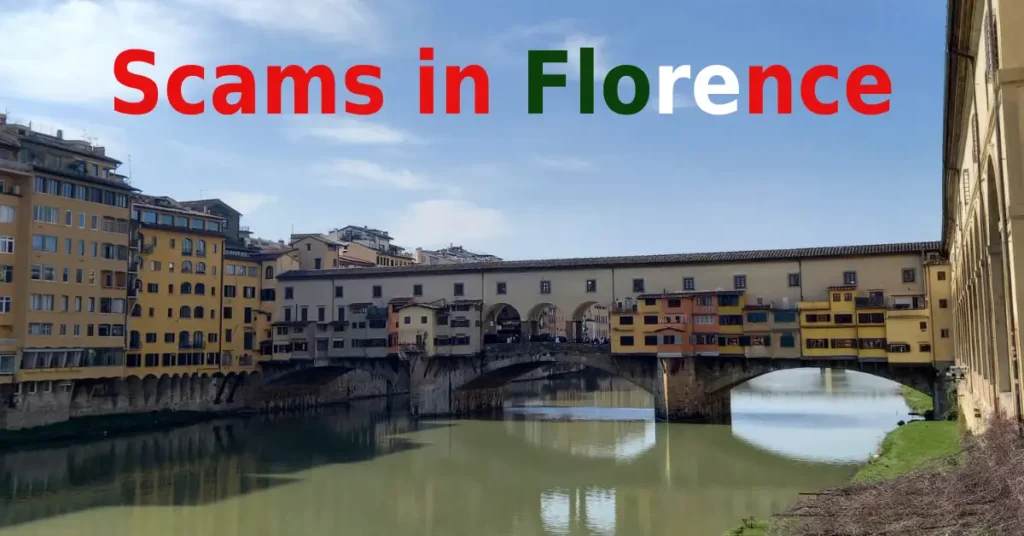
Florence is one of Italy’s safest and most visited cities, attracting millions of travelers each year. Most visitors enjoy their stay without any problems. However, the large number of tourists creates opportunities for scammers who target people unfamiliar with the city. These scams rarely involve violence. Instead, they rely on distraction, confusion, pressure, or deception to persuade victims to hand over money or valuables.
The most common scams in Florence include pickpocketing, fake police impersonations, counterfeit designer goods, fraudulent museum tickets, holiday rental scams, restaurant overcharging, taxi fare scams, friendship bracelet tricks near the Duomo, misleading street vendors, distraction theft schemes, fake gold jewelry offers, aggressive street performers demanding payment, photography scams, street gambling games, begging schemes, and mirror scam designed to pressure tourists into giving money.
Most scam attempts occur in crowded tourist areas such as Piazza del Duomo, Ponte Vecchio, Piazza della Signoria, the Uffizi Gallery surroundings, and Santa Maria Novella train station. Scammers often focus on busy hours when visitors are distracted by sightseeing, taking photos, carrying luggage, or navigating unfamiliar streets. The best defense is awareness. Understanding how these scams work makes it much easier to recognize warning signs, avoid becoming a target, and enjoy your time in Florence with confidence.
What are the Common Tourist Scams in Florence?
The common tourist scams in Florence are outlined below.
1. Pickpocketing
Pickpocketing is one of the most common crimes in Florence, especially in crowded areas like the Duomo, Ponte Vecchio, and public transport. Scammers often work in teams (most of them are girls dressed in modern clothing), with one person creating a distraction (using an umbrella or newspaper) while another steals your belongings.
How to Avoid It:
- Use anti-theft bags or money belts.
- Keep your valuables in front pockets or secure compartments.
- Stay alert in crowded areas and avoid displaying expensive items.
2. Fake Police
Scammers posing as police officers may approach you, demanding to see your passport or wallet. They often claim to be investigating counterfeit money or other issues.
How to Avoid It:
- Always ask for official identification.
- Never hand over your passport or wallet to strangers.
- If in doubt, go to the nearest police station or tourist information center.
3. Fake Luxury Products
Florence is known for its high-end fashion, but counterfeit goods are rampant in markets and street stalls. These fake products are often of poor quality and sold at inflated prices.
How to Avoid It:
- Purchase luxury items only from authorized retailers.
- Be wary of deals that seem too good to be true.
- Check for authenticity certificates when buying high-value items.
4. Fake Tickets
Scammers sell fake or overpriced tickets to popular attractions like the Uffizi Gallery or Accademia Gallery. These tickets may be invalid or forgeries.
How to Avoid It:
- Buy tickets only from official websites or authorized vendors.
- Avoid purchasing tickets from street vendors or unofficial sellers.
- Verify the authenticity of your tickets before entering the attraction.
Book Tickets for Florence Duomo, Uffizi, Accademia Gallery, and other destinations.
5. Holiday Home Scams
Fake vacation rental listings are a growing problem in Florence. Scammers create convincing listings on platforms like Airbnb, only to disappear after receiving payment.
How to Avoid It:
- Use reputable platforms and verify the property’s details.
- Read reviews and check the host’s credentials.
- Avoid paying outside the platform or through unsecured methods.
6. Menu Scams
Some restaurants in touristy areas charge hidden fees or inflate prices for tourists. This can include service charges, cover fees, or overpriced items.
How to Avoid It:
- Check menus for prices before ordering.
- Ask about additional charges or fees.
- Avoid restaurants with overly aggressive touts or no visible pricing.
7. Overcharging Taxis
Unscrupulous taxi drivers may take longer routes or refuse to use the meter, resulting in inflated fares.
How to Avoid It:
- Use official taxi services or ride-sharing apps like Uber.
- Ensure the meter is running during your ride.
- Familiarize yourself with approximate fares for common routes.
8. Friendship Bracelets (Most Common in Duomo Area)
Street vendors may offer “free” roses or bracelets, only to demand payment afterward. They often target couples or solo travelers.
How to Avoid It:
- Politely but firmly decline any unsolicited offers.
- Avoid engaging with street vendors.
- Walk away if they become aggressive.
9. Scam Coffee Drinks
Some cafés in touristy areas charge exorbitant prices for simple drinks like espresso or cappuccino.
How to Avoid It:
- Check prices before ordering.
- Avoid cafés in heavily touristy areas.
- Look for local recommendations or reviews.
10. The ‘Paper Move’
Scammers place cheap posters or artwork on the ground, often near curbs or crossing paths. If you step on them, they demand payment.
How to Avoid It:
- Stay alert and avoid stepping on any items laid out on the ground.
- Walk around any suspiciously placed objects.
- Ignore aggressive demands for payment.
11. Jewelry Scam
Street vendors may sell fake or overpriced jewelry, often targeting tourists near major attractions.
How to Avoid It:
- Avoid engaging with street vendors.
- Purchase jewelry from reputable stores.
- Be cautious of unsolicited offers or “special deals.”
12. Street Painting and Mime Artists
Artists or performers may demand payment for photos or interactions, even if you didn’t agree to pay.
How to Avoid It:
- Avoid taking photos or engaging unless you’re willing to pay.
- Politely decline if approached.
- Keep a safe distance from performers.
13. Photography Scam
Strangers may offer to take your photo, only to demand payment afterward or steal your camera.
How to Avoid It:
- Politely decline or only ask trusted individuals for help.
- Use a selfie stick or tripod for photos.
- Keep your camera or phone secure at all times.
4. Cup and Ball Game
A gambling scam often seen in Piazza Michelangelo area in Florence, where scammers use sleight of hand to ensure you lose. You will see people winning hefty amounts of money, those are scammers themselves.
How to Avoid It:
- Avoid participating in street games.
- Keep a safe distance from groups gathered around games.
- Walk away if approached by participants.
15. “I’m Short of One Euro”
You’ll be approached by a young boy or girl with 7 or 8 Euros in his/her hand. He or she will ask you to spare 1 or 2 Euros as they are short of money. This type of scam is common in the Cascine or Novoli area in Florence.
How to Avoid It:
- Just say you don’t have any cash or spare coins.
16. Mirror Scam
You may become the victim of mirror scam if you are driving around the outskirts of Florence. This scheme often targets tourists driving rental cars or foreign-registered vehicles. Let me share my personal experience here, a car drove past me and then stopped at a tight corner of the street. The drivers inside that car waited for me to pass their car. As I passed the car, I heard a sound as if something stuck the body of my car. I drove my car without stopping because I knew it’s a scam and my car was well-apart from the other car as I passed by them.
Here’s waht might happend to you. A driver may suddenly pull alongside your vehicle, honk, flash lights, or make urgent gestures to get you to stop. Once you pull over, they claim that your car threw a stone and damaged their wing mirror or another part of their vehicle. In many cases, a second vehicle or person may appear and support the story. The scammers then pressure the driver to pay cash on the spot to avoid involving the police or insurance companies. Simply call local police on 115 and tell them the situation. Most probably they will run away if you tell them about the police.
Understanding the Landscape of Scams in Italy
A study conducted by the Italian National Institute of Statistics (ISTAT) on tourist safety highlights that many scams rely heavily on psychological manipulation.
Scammers are adept at creating a sense of urgency or exploiting cultural differences to catch tourists off guard. For instance, the “fake police” scam leverages the authority and trust associated with law enforcement.
A scammer posing as a police officer may approach a tourist, claiming to investigate counterfeit money or a similar issue, and demand to see their passport or wallet. The perceived legitimacy of the authority figure often leads tourists to comply without question.
Similarly, the “paper move” scam preys on tourists’ lack of awareness. Scammers place cheap posters or artwork on the ground in high-traffic areas, such as near curbs or crossing paths.
When a tourist inevitably steps on the item, the scammer aggressively demands payment, often creating a scene to intimidate the victim into complying. This scam exploits the tourist’s distraction and unfamiliarity with local tactics, making it highly effective in crowded areas like the Florence Duomo.
What are general safety tips to stay safe in Florence?
- Stay Vigilant in Crowded Areas: Pickpockets and scammers thrive in busy places like the Duomo and Ponte Vecchio.
- Avoid Engaging with Strangers: Politely decline unsolicited offers or conversations.
- Secure Your Valuables: Use anti-theft bags and keep your belongings close.
- Stick to Well-Lit Areas at Night: Avoid isolated spots like Santa Croce and Cascine after dark.
- Trust Your Instincts: If something feels off, walk away.
Which areas in Florence to stay cautious?
The ares in Florence to stay cautious are mentioned below.
- Florence Santa Maria Novella Station: Known for pickpockets and aggressive scammers.
- Piazza del Duomo: High risk of pickpocketing and the “paper move” scam.
- Piazza Michelangelo: Watch out for the cup and ball game scam.
- Santa Croce and Cascine: Avoid at night due to safety concerns.
Is it safe to walk in Florence at night?
Yes, but stick to well-lit and populated areas. Avoid isolated spots like Santa Croce and Cascine at night.
Is Florence safe for tourists?
Yes, Florence is generally safe, but tourists should remain vigilant against scams.
Which areas should I avoid in Florence?
Avoid the immediate surroundings of Florence Santa Maria Novella Station and isolated areas at night.
What is the safest area to stay in Florence, Italy?
The city center, particularly near major attractions like the Duomo, is safe and well-patrolled by police.
Where there are tourists, there are scams. The thing is, you should stay attentive and stay away from activities that feel like honey traps. I’ve been living in Florence for the last 10 years and I’ve heard multiple stories about local scams. My advice is to stay away from the bracelet guys, mime artists, luxury products sold on streets, paper move, and cup/ball game.
Did you noticed any new scam than the one I’ve mentioned above, please do mention in the comments.