
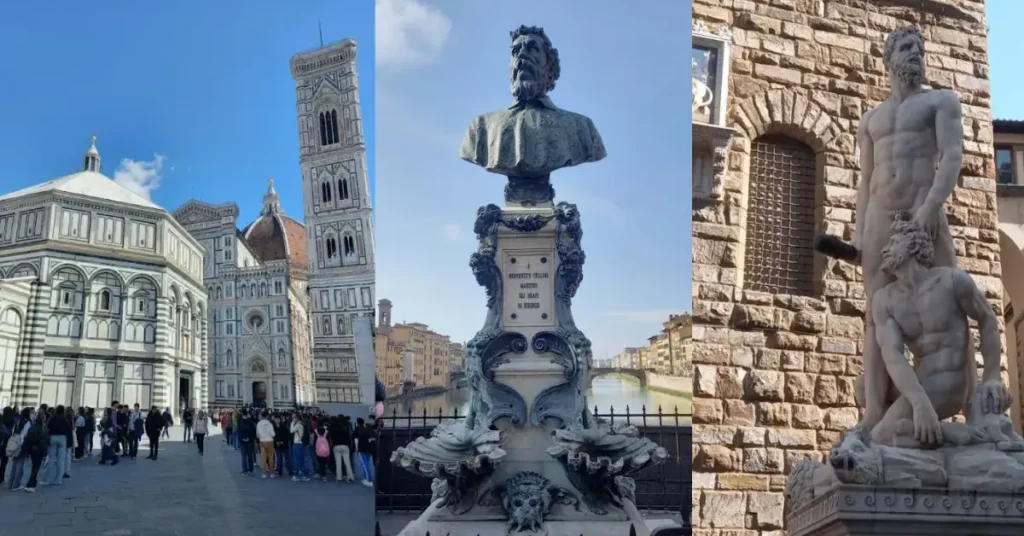
A Florence one day itinerary follows a chronological walking route from Santa Maria Novella in the west to Piazzale Michelangelo in the south. The route covers 17 major landmarks across the Historic Center and the Oltrarno District. Florence’s Historic Center fits inside a one-square-kilometer pedestrian zone, so visitors cross the city on foot in 10 to 15 minutes between stops. One day in Florence delivers Renaissance art, civic history, Tuscan dining, and a sunset terrace view in 12 daytime hours.
This guide lets you visit the most iconic places in Florence within 24 hours including Santa Maria Novella, the Duomo complex, Palazzo Strozzi, Orsanmichele, Piazza della Signoria with the Loggia dei Lanzi and Palazzo Vecchio, the Uffizi Gallery, Ponte Vecchio, Palazzo Pitti, Boboli Gardens, Piazzale Michelangelo, and Oltrarno dining. The guide adds day-two stops for the Accademia Gallery and Basilica of Santa Croce.
Florence 1 Day Itinerary at a Glance
The Florence 1 day itinerary follows a west-to-east-to-south arc through the Historic Center. The route starts at Santa Maria Novella and ends in the Oltrarno District after a Piazzale Michelangelo sunset.
| Time | Stop | Duration |
|---|---|---|
| 8:00 AM | Santa Maria Novella Church + Pharmacy | 75 min |
| 9:30 AM | The Duomo + Brunelleschi’s Dome | 90 min |
| 11:00 AM | Palazzo Strozzi (optional) | 15 min |
| 11:30 AM | Orsanmichele | 30 min |
| 12:00 PM | Piazza della Signoria + Loggia dei Lanzi | 30 min |
| 12:30 PM | Palazzo Vecchio | 75 min |
| 1:45 PM | Lunch near Piazza della Signoria | 60 min |
| 3:00 PM | Uffizi Gallery | 150 min |
| 5:30 PM | Ponte Vecchio + Arno River | 30 min |
| 6:00 PM | Walk past Palazzo Pitti to Piazzale Michelangelo | 45 min |
| 6:45 PM | Piazzale Michelangelo sunset | 60 min |
| 8:00 PM | Dinner in Oltrarno (Piazza Santo Spirito / Via Sant’Agostino) | 90 min |
8:00 AM — Santa Maria Novella Church and Ancient Pharmacy (75 Minutes)
Santa Maria Novella is a Gothic-Renaissance basilica at the western edge of Florence’s Historic Center. The Dominican order built the church between 1279 and 1357. The basilica sits 5 minutes from Santa Maria Novella train station, which makes it the natural first stop for travelers arriving by train.
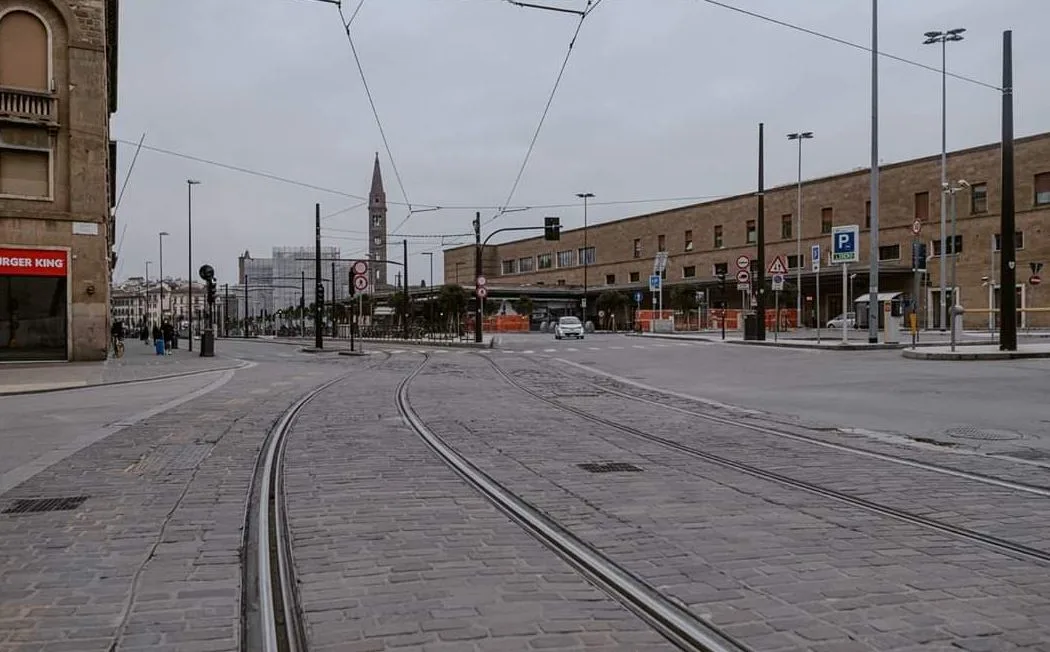
What to See at Santa Maria Novella (45 minutes)
The church holds several masterpieces of early Renaissance art.
- Masaccio’s “Trinity” fresco — one of the first works in linear perspective (1427)
- Giotto’s Crucifix — wooden crucifix from 1290
- Brunelleschi’s Crucifix — in the Gondi Chapel
- Strozzi Chapel frescoes — by Filippino Lippi
- Tornabuoni Chapel — Domenico Ghirlandaio fresco cycles from 1485-1490
- Spanish Chapel — 14th-century frescoes by Andrea di Bonaiuto
Entry costs €7.50. The ticket includes the cloisters and chapter house. Visitors with a fashion-conscious eye notice the marble façade by Leon Battista Alberti, completed in 1470.
Officina Profumo-Farmaceutica di Santa Maria Novella (30 minutes)
The Officina Profumo-Farmaceutica is the oldest pharmacy in Europe. The Dominican monks opened the shop in 1612 from monastery recipes that date to 1221. The pharmacy sits 2 minutes east of the basilica on Via della Scala.
Visitors browse hand-mixed products from 800-year-old recipes:
- Acqua di Santa Maria Novella — anti-hysteria rose water from 1614
- Almond hand cream — Caterina de’ Medici’s original formula
- Pot Pourri di Santa Maria Novella — terracotta jar of herbs
- Soaps and colognes — wrapped in vintage paper packaging
- Frescoed sales hall — 17th-century vaulted ceilings
Entry is free. A small soap costs €8 and packs flat in a suitcase.
9:30 AM — The Duomo and Brunelleschi’s Dome (90 Minutes)
The Duomo, formally the Cathedral of Santa Maria del Fiore, sits 10 minutes east of Santa Maria Novella. The cathedral is the third-largest church in Europe by area. Arnolfo di Cambio began construction in 1296 and Filippo Brunelleschi crowned it with his dome in 1436.
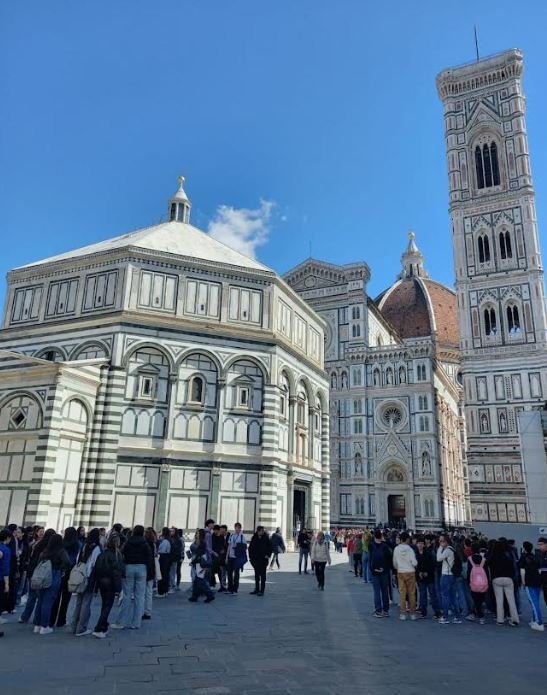
Piazza del Duomo (free, 15 minutes)
Piazza del Duomo holds four major monuments that all sit within 30 meters of each other.
- Cathedral of Santa Maria del Fiore — pink, green, and white marble façade
- Brunelleschi’s Dome — 463 steps, 91 meters tall
- Giotto’s Bell Tower (Campanile) — 414 steps, 84 meters tall
- Baptistery of San Giovanni — Ghiberti’s “Gates of Paradise” bronze doors
The piazza is free at all hours. Photographers find the best façade angle from the Bell Tower side.
Cathedral Interior (free, 15 minutes)
The cathedral interior is free to enter. Visitors see Vasari and Zuccari’s “Last Judgment” frescoes inside the dome from the floor. The clock by Paolo Uccello (1443) runs counter-clockwise.
Brunelleschi’s Dome Climb (30 minutes, €30 Brunelleschi Pass)
The dome climb covers 463 steps with no elevator. The route passes between the inner and outer shells of the dome. The top terrace delivers a 360-degree view of Florence and the Tuscan hills.
Skip the climb if you have knee problems or claustrophobia. The Ghiberti Pass (€15) covers the Baptistery, Bell Tower, and Opera del Duomo Museum without the dome climb. Reserve tickets for climbing Duomo or Giotto’s Bell Tower in advance to skip the long lines.
11:00 AM — Palazzo Strozzi (Optional, 15 Minutes)
Palazzo Strozzi is a Renaissance palace 5 minutes south of the Duomo on Piazza Strozzi. The Strozzi family commissioned the palace in 1489 as a rival to the Medici Palazzo Medici Riccardi. The rusticated stone façade defines High Renaissance civic architecture.
The courtyard stays free to enter. A glance through the iron gate takes 5 minutes. Temporary exhibitions inside cost €15 to €18 and feature contemporary artists like Anselm Kiefer, Jeff Koons, and Marina Abramović.
Skip the interior on a one-day itinerary unless an exhibition matches your interest. Continue south down Via dei Tornabuoni to reach the next stop.
11:30 AM — Orsanmichele Church and Museum (30 Minutes)
Orsanmichele sits halfway between the Duomo and Piazza della Signoria on Via dell’Arte della Lana. The 14th-century building started as a grain market in 1337 and converted to a church by 1349. The structure stands on three floors and looks like an office building from outside.
Exterior Niches (10 minutes, free)
The Orsanmichele exterior holds 14 niches with sculptures by the Florentine guilds. Each guild commissioned its patron saint from the top Renaissance sculptors.
- Donatello’s “Saint Mark” — Linen Weavers’ Guild
- Donatello’s “Saint George” — Armorers’ Guild (original now at Bargello)
- Ghiberti’s “Saint John the Baptist” — Calimala Guild, first bronze of the Renaissance
- Verrocchio’s “Incredulity of Saint Thomas” — Tribunal of Merchandise
- Giambologna’s “Saint Luke” — Judges and Notaries’ Guild
The current sculptures are copies. The originals sit inside the museum upstairs.
Church Interior and Orcagna Tabernacle (15 minutes, €4)
The church interior centers on Andrea Orcagna’s marble tabernacle from 1359. The tabernacle frames Bernardo Daddi’s “Madonna and Child with Eight Angels” painting from 1347. The tabernacle survived plague, fire, and flood across seven centuries.
Orsanmichele Museum and Terrace (15 minutes, included)
The museum on the upper floors holds the original guild sculptures. The second-floor terrace gives a near-eye-level view of the Duomo and Giotto’s Bell Tower.
Orsanmichele opens Wednesday to Monday 8:30 AM to 6:30 PM. The church and museum stay closed on Tuesdays. Entry costs €4 alone or includes with the Bargello combined ticket (€21 for five museums over 72 hours).
12:00 PM — Piazza della Signoria and Loggia dei Lanzi (30 Minutes)
Piazza della Signoria sits 3 minutes south of Orsanmichele down Via dei Calzaiuoli. The square has served as Florence’s political center since the 14th century. The piazza is free to enter and stays open 24 hours.
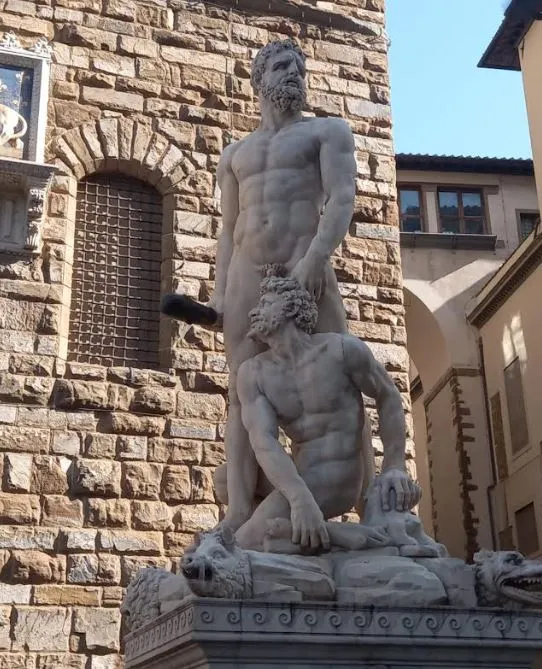
Piazza della Signoria Sculptures (15 minutes, free)
The square holds an open-air sculpture collection.
- Neptune Fountain — Ammannati’s 1565 marble fountain
- David replica — outside Palazzo Vecchio (original sits in Accademia)
- Hercules and Cacus — Baccio Bandinelli, 1534
- Equestrian Statue of Cosimo I — Giambologna’s bronze masterpiece
- Marzocco lion — Donatello copy, symbol of Florence
Loggia dei Lanzi (15 minutes, free)
Loggia dei Lanzi is an open-air sculpture gallery at the south end of Piazza della Signoria. The 14th-century loggia holds free Renaissance masterpieces.
- Cellini’s “Perseus with the Head of Medusa” — bronze, 1554
- Giambologna’s “Rape of the Sabine Women” — single block of marble, 1583
- Giambologna’s “Hercules Beating the Centaur Nessus” — 1599
- Roman copies — six ancient statues line the back wall
The Loggia dei Lanzi stays open 24 hours with no ticket. Sunrise and late afternoon offer the best light for photos.
12:30 PM — Palazzo Vecchio (75 Minutes)
Palazzo Vecchio is the civic palace of Florence. The building has housed city government since 1299 and now serves as both city hall and museum. The palace sits on the east side of Piazza della Signoria. Tickets cost €14 for the museum and €25 for the museum plus tower climb.
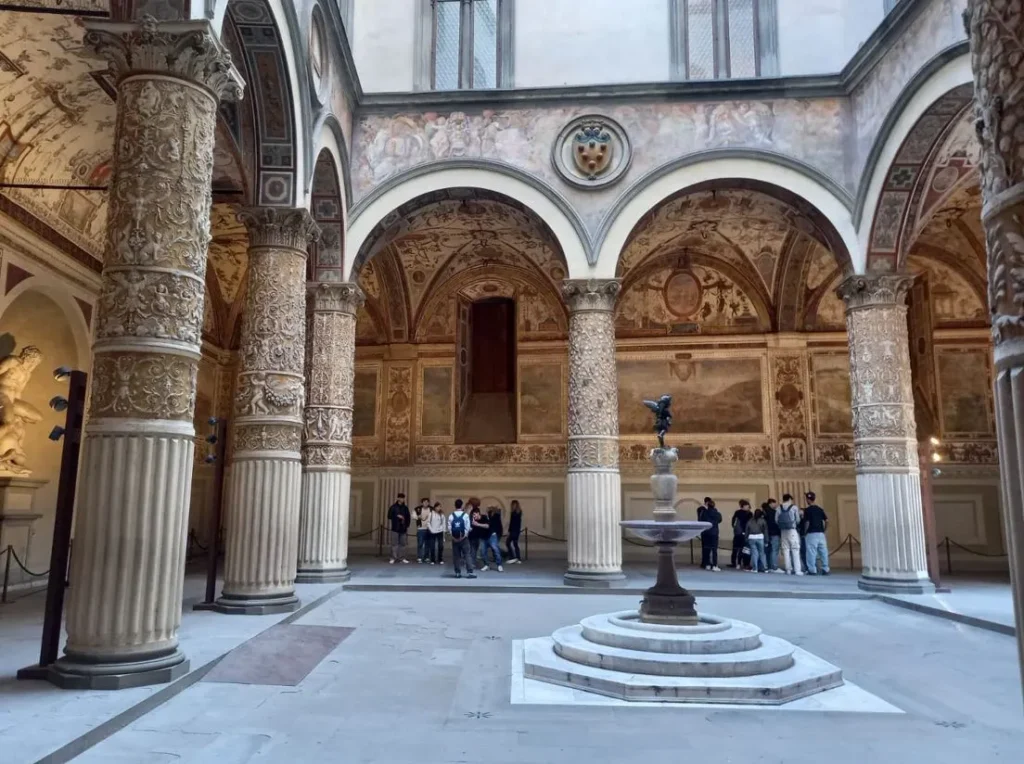
What to see inside Palazzo Vecchio:
- Salone dei Cinquecento — Hall of the Five Hundred with Vasari frescoes
- Michelangelo’s “Victory” — marble sculpture in the Salone
- Studiolo of Francesco I — Renaissance treasure room
- Map Room — 53 hand-painted 16th-century maps
- Apartments of Eleonora di Toledo — frescoed Medici living quarters
- Arnolfo Tower climb — 233 steps to a 95-meter panoramic terrace
Plan 90 minutes for the museum and another 30 minutes for the tower climb. The elevator covers the museum but not the tower. Booking is required for the tower.
1:45 PM — Lunch in Florence (60 Minutes)
Lunch options sit within 5 minutes of Piazza della Signoria. Two formats fit a one-day itinerary: a sit-down trattoria or quick street food.
Restaurants Near Piazza della Signoria
Reserve a table one week ahead at top spots. Florence lunch features pappardelle al cinghiale (wild boar pasta), ribollita (bread soup), crostini neri (chicken liver toast), and bistecca alla Fiorentina (T-bone steak).
- All’Antico Vinaio — Via dei Neri 65/r, famous schiacciata sandwiches €6 to €8
- Osteria Vini e Vecchi Sapori — Via dei Magazzini 3/r, Tuscan classics €25 to €35
- Trattoria Anita — Via del Parlascio 2/r, family-run lunch spot €20 to €30
- Cantinetta dei Verrazzano — Via dei Tavolini 18/r, wine bar and bakery €15 to €25
Street Food in the Historic Center
Street food vendors cluster around Mercato Centrale and Mercato Nuovo. Lampredotto (tripe sandwich) carts near Mercato Nuovo serve a true Florentine snack for €5. Mercato Centrale’s upstairs food hall offers pizza, pasta, and meat dishes for €10 to €15.
A sit-down lunch takes 60 to 90 minutes. Street food takes 15 to 30 minutes total.
3:00 PM — Uffizi Gallery (150 Minutes)
The Uffizi Gallery sits directly south of Piazza della Signoria, adjacent to Palazzo Vecchio. Giorgio Vasari designed the U-shaped palace in 1560 for Cosimo I de’ Medici. The building’s name means “offices” in Italian. The Uffizi now holds the world’s most important Renaissance painting collection across 100 rooms.
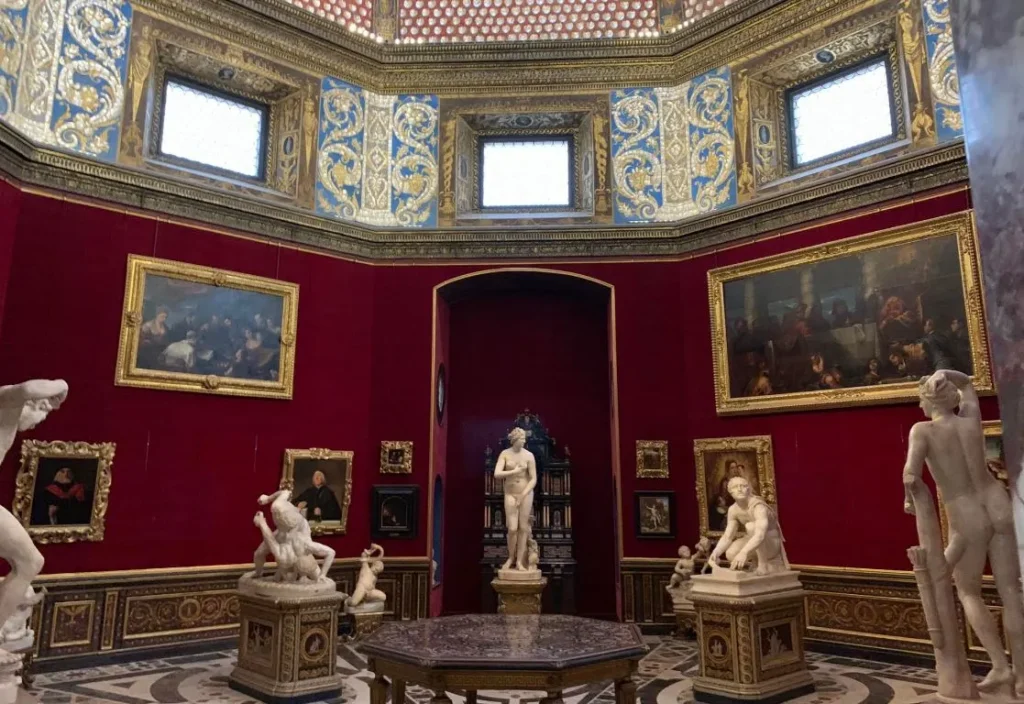
Uffizi Ticket Prices for 2026
- Standard ticket online — €29 (€25 day of)
- After 4:00 PM ticket — €20 online, €16 day of
- PassePartout 5-day combo — €40 (Uffizi + Pitti + Boboli)
- EU citizens 18-25 — €2 reduced
- Under 18 — free
Book the Uffizi at least one month ahead through tickets.uffizi.it. Tickets for popular slots sell out weeks in advance.
Must-See Uffizi Artworks
- Botticelli’s “Birth of Venus” — Room 10-14
- Botticelli’s “Primavera” — Room 10-14
- Leonardo da Vinci’s “The Adoration of the Magi” — Room 35
- Leonardo’s “Annunciation” — Room 35
- Michelangelo’s “Doni Tondo” — Room 35
- Caravaggio’s “Medusa” — Room 90
- Titian’s “Venus of Urbino” — Room 83
- Raphael’s “Madonna of the Goldfinch” — Room 66
- Artemisia Gentileschi’s “Judith Slaying Holofernes” — Room 90
The rooftop café offers Duomo and Palazzo Vecchio views with an espresso for €3.50. Plan 2 to 3 hours for the visit.
5:30 PM — Ponte Vecchio and the Arno River (30 Minutes)
Ponte Vecchio is the oldest bridge in Florence, built in 1345 to replace a Roman bridge. The bridge holds gold and jewelry shops only, a Medici decree from 1565 that banned butchers and tanners for hygiene reasons. The Vasari Corridor runs above the shops as a private Medici walkway between Palazzo Vecchio and Palazzo Pitti.
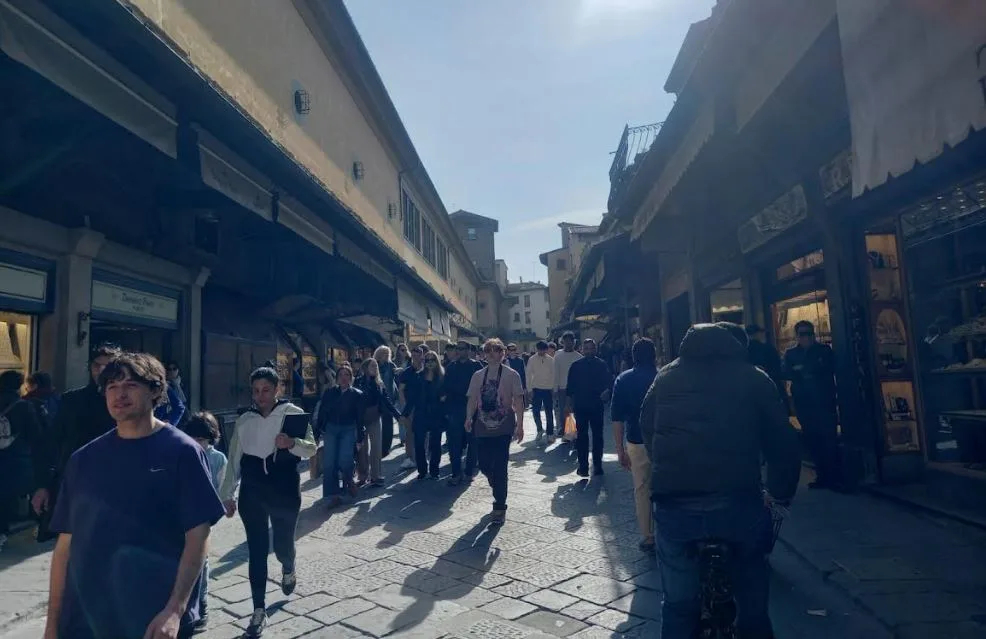
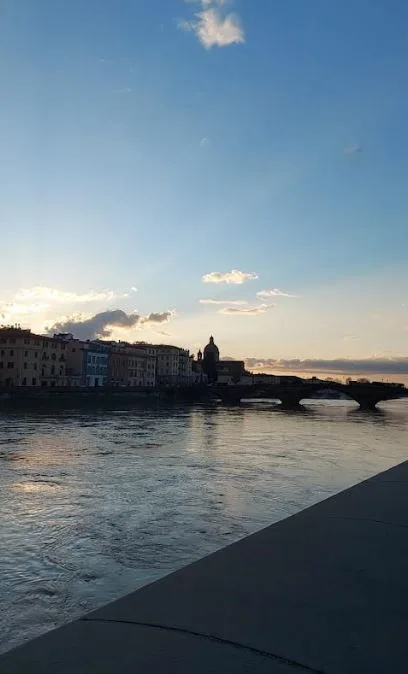
Ponte Vecchio sits 5 minutes south of the Uffizi exit. Visitors cross the bridge for free at all hours.
What to see at Ponte Vecchio:
- Jewelry shops — Cassetti, Fratelli Piccini, U. Gherardi run since 1935
- Benvenuto Cellini bust — bronze tribute at the center of the bridge
- Vasari Corridor windows — visible from the bridge looking up
- Arno River views — both upstream and downstream
- Sunset gold tones — late afternoon light on stone façades
The middle of the bridge offers the best photo angle of the Arno River and the rooftops on both sides. Spend 30 to 45 minutes browsing and shooting photos.
6:00 PM — Walk Through the Oltrarno District (15 Minutes)
The Oltrarno District is the neighborhood south of the Arno River. Locals call it “Diladdarno.” The district holds artisan workshops, small piazzas, and authentic trattorias outside the main tourist crowd. Cross Ponte Vecchio to enter the Oltrarno.
Walk east along the Arno toward Piazzale Michelangelo. The route passes Palazzo Pitti on the right.
Palazzo Pitti and Boboli Gardens (Day Two)
Palazzo Pitti is a Renaissance palace 10 minutes south of Ponte Vecchio. The Pitti family began construction in 1458, and the Medici expanded it after 1550. The complex now holds five museums in one ticket structure.
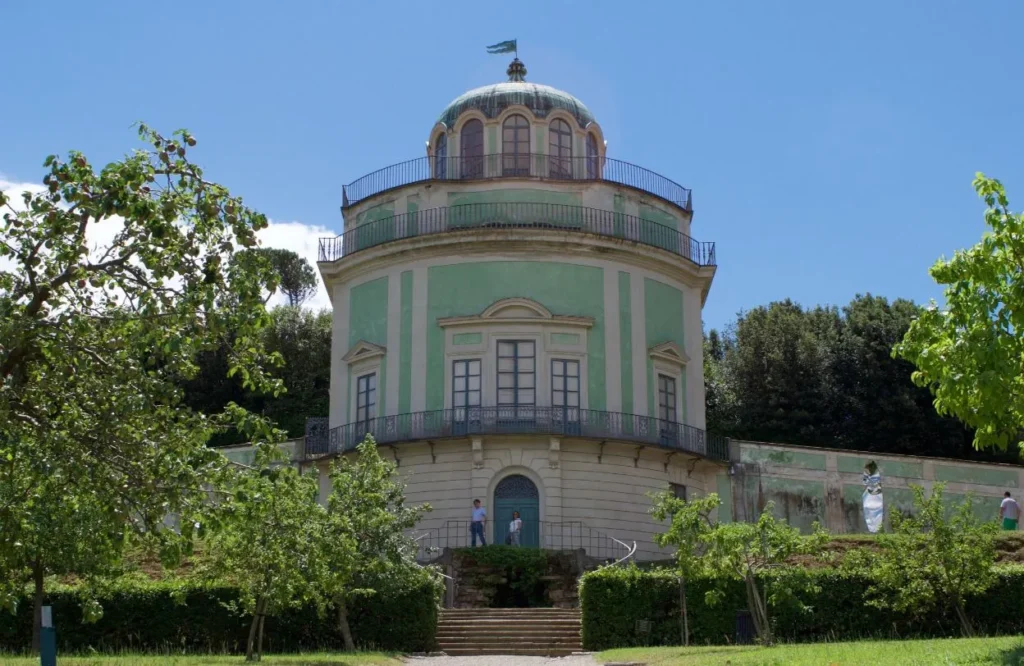
The five museums inside Palazzo Pitti:
- Palatine Gallery — Raphael, Titian, and Caravaggio masterpieces
- Royal Apartments — Medici and Habsburg-Lorraine living quarters
- Modern Art Museum — 18th to 20th-century Italian art
- Costume Museum — Italian fashion history
- Silver Museum (Treasury of the Grand Dukes) — Medici jewels and decorative arts
Boboli Gardens sit behind Palazzo Pitti. The 45,000-square-meter formal gardens hold cypress avenues, fountains, an amphitheater, and the Grotto of Buontalenti.
Skip Palazzo Pitti and Boboli on a one-day itinerary. The complex needs 3 to 4 hours. Save them for day two and stop only to view the rusticated stone façade from Piazza Pitti.
6:45 PM — Piazzale Michelangelo Sunset (60 Minutes)
Piazzale Michelangelo is a hilltop located 20 minutes uphill from Ponte Vecchio. Giuseppe Poggi designed the terrace in 1869 as part of Florence’s urban renewal plan. This beautiful viewpoint sits south of the Arno River at 104 meters elevation.
Walk routes to Piazzale Michelangelo:
- Via dei Bardi → Via di San Niccolò → stairs — direct but steep, 20 minutes
- Bus 12 or 13 from Piazza San Marco — €1.70, 15 minutes
- Via del Monte alle Croci — gentler slope, 25 minutes
Arrive one hour before sunset for the best light. Florence sunsets fall between 4:30 PM (winter) and 9:00 PM (summer). The terrace offers free entry. Vendors sell drinks and snacks at tourist prices.
What to see from Piazzale Michelangelo:
- The Duomo and Brunelleschi’s Dome — front and center on the skyline
- Palazzo Vecchio tower — clearly visible to the left
- Ponte Vecchio and the Arno River — winding through the city
- Tuscan hills and Fiesole — beyond the city to the north
- San Miniato al Monte church — 5-minute walk uphill from the terrace
- David replica — bronze copy in the center of the square
8:00 PM — Dinner in Oltrarno (90 Minutes)
Dinner in Oltrarno starts at 7:30 PM to 9:30 PM. The neighborhood hosts the best authentic Florentine dining outside the tourist crowd. Walk down from Piazzale Michelangelo through San Niccolò to reach Piazza Santo Spirito and Via Sant’Agostino.
Piazza Santo Spirito (Dining Cluster)
Piazza Santo Spirito sits in the heart of Oltrarno. The square holds Brunelleschi’s last church (Basilica di Santo Spirito) and the best aperitivo crowd in Florence. Italian aperitivo runs 6:00 PM to 8:00 PM with a glass of Chianti and free snacks at €8 to €12.
Recommended dinner spots near Piazza Santo Spirito:
- Trattoria Casalinga — Via dei Michelozzi 9/r, classic Tuscan menu €20 to €30
- Borgo Antico — Piazza Santo Spirito 6/r, piazza-side seating €25 to €40
- Gusta Pizza — Via Maggio 46/r, wood-fired Neapolitan pies €10 to €15
Restaurants on Via Sant’Agostino
Via Sant’Agostino runs west from Piazza Santo Spirito. The street holds small trattorias popular with locals.
- Trattoria La Casalinga — Via Sant’Agostino, family-run Tuscan dishes
- Il Santo Bevitore — Via Santo Spirito 64/r, modern Florentine €35 to €55
- 5 e Cinque — Piazza della Passera 1, vegetarian and Ligurian €20 to €35
Book one week ahead for Friday and Saturday nights. Plan €25 to €50 per person for a full Tuscan dinner with wine.
Day Two Recommendations: Accademia, Santa Croce, Palazzo Pitti
A second day in Florence covers the attractions skipped from the one-day route.
The Accademia Gallery (Day Two, 120 Minutes)
The Accademia Gallery sits on Via Ricasoli, 5 minutes north of the Duomo. The museum houses Michelangelo’s original David sculpture from 1504. Tickets cost €16 plus a €4 reservation fee.
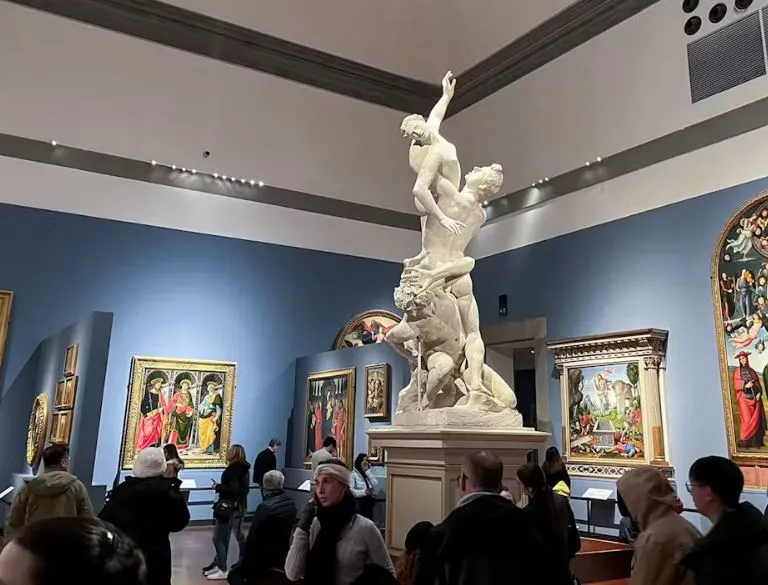
The Accademia holds more than just David:
- Michelangelo’s “David” — 17 feet of Carrara marble
- Michelangelo’s “Prisoners” (Unfinished Slaves) — emerging from rough marble
- Hall of the Colossus — Giambologna’s “Rape of the Sabine Women” original plaster
- Sala del Colosso — 14th to 16th-century Florentine paintings
- Museum of Musical Instruments — Medici collection including the first piano
Book at least two months ahead. The Accademia closes Mondays.
Basilica of Santa Croce (Day Two, 60 Minutes)
The Basilica of Santa Croce is a Franciscan basilica 10 minutes east of Piazza della Signoria. The basilica holds the tombs of Italy’s most famous historical figures. Entry costs €8 and includes the cloisters and Pazzi Chapel.
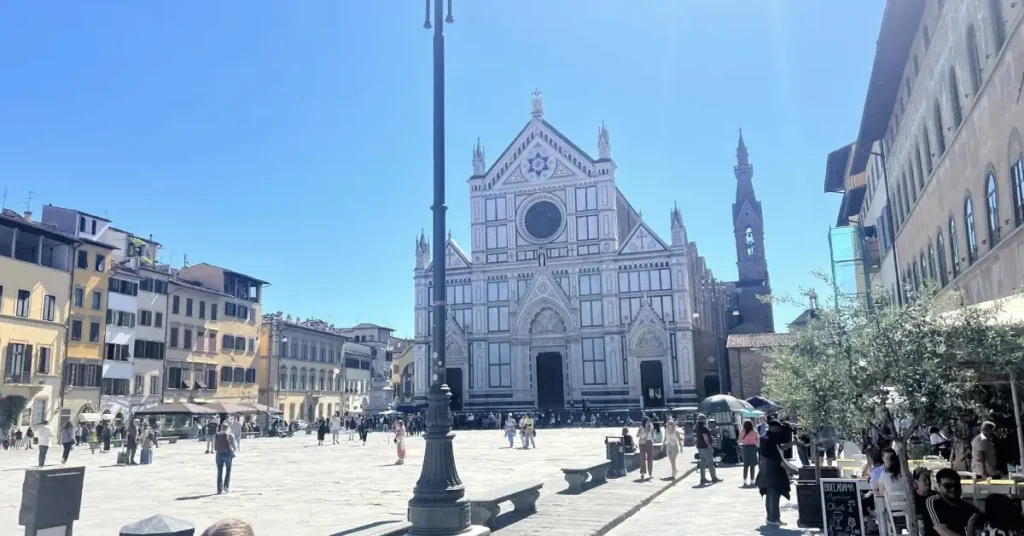
Famous tombs and monuments inside Santa Croce:
- Michelangelo’s tomb — designed by Giorgio Vasari in 1570
- Galileo Galilei’s tomb — moved here in 1737
- Niccolò Machiavelli’s tomb — added in 1787
- Gioachino Rossini’s tomb — the opera composer
- Dante Alighieri’s cenotaph — empty memorial (Dante is buried in Ravenna)
The basilica also holds Giotto frescoes in the Bardi and Peruzzi Chapels. Brunelleschi designed the Pazzi Chapel in the cloister around 1430.
Palazzo Pitti and Boboli Gardens (Day Two, 240 Minutes)
Spend a full afternoon at Palazzo Pitti and Boboli on day two. The PassePartout ticket (€40) saves €12 across the Uffizi-Pitti-Boboli combo. Spring and autumn offer the best Boboli garden views.
What are Free Attractions to Visit in Florence?
Free attractions in Florence cover sculptures, churches, public squares, and architectural exteriors. Budget travelers see 50% of the city’s highlights without paying entry fees.
The best free attractions in Florence:
- Loggia dei Lanzi — outdoor Renaissance sculpture gallery
- Cathedral of Santa Maria del Fiore (interior) — free entry, no dome climb
- Orsanmichele exterior — 14 saint sculptures by Donatello and Ghiberti
- Piazza della Signoria — open-air museum with Neptune Fountain
- Piazza del Duomo — view the cathedral, bell tower, and baptistery
- Ponte Vecchio — walk across at any hour
- Piazza Santo Spirito — quiet Oltrarno square with Brunelleschi’s last church
- Piazzale Michelangelo — free hilltop sunset viewpoint
- Arno River banks — riverside walks both north and south
Practical Tips for a Florence One Day Itinerary
These tips save time, money, and tired feet across the 24-hour route.
What to Pack
- Comfortable walking shoes — cobblestones bruise thin soles
- Refillable water bottle — free fountains run across the city
- Phone with offline Google Maps — narrow streets confuse GPS
- Sunglasses and a hat — summer sun hits 35°C
- Light layer or scarf — for church entry dress codes
When to Book Tickets
Book the Uffizi at least one month in advance through tickets.uffizi.it. Book the Brunelleschi Pass two months ahead for peak season. Book the Accademia (for day two) at least two months ahead. Restaurant reservations need one week minimum for popular spots.
Crowd Strategy
Start at 8:00 AM to beat tour groups. Tour buses arrive at 10:00 AM. Lunch hour (1:00 PM to 2:30 PM) thins the Uffizi crowd. Late afternoon (4:00 PM onward) brings smaller crowds plus the Uffizi discount.
Accessibility Notes
Florence’s cobblestone streets challenge wheelchairs and strollers. The Duomo dome climb has no elevator. Palazzo Vecchio offers an elevator for the museum (not the tower). The Uffizi has elevators on every floor. Bus 12 or 13 reaches Piazzale Michelangelo step-free from Piazza San Marco.
Is one day enough to see Florence?
One day is enough to see Florence’s highlights but rushes the experience. A 24-hour itinerary covers Santa Maria Novella, the Duomo, Orsanmichele, Piazza della Signoria, Palazzo Vecchio, the Uffizi Gallery, Ponte Vecchio, and Piazzale Michelangelo. Add a second day for the Accademia, Santa Croce, Palazzo Pitti, and Boboli Gardens.
Do I need to book tickets in advance for Florence?
Yes, you need to book Florence tickets in advance for the Uffizi, Accademia, and Brunelleschi’s Dome. Book one to two months ahead for peak season (April to October). Without booking, queues run 2 to 3 hours at the top museums. Tickets sell out for popular time slots weeks in advance.
What’s the best area to stay in Florence?
The best area to stay in Florence for a one-day itinerary is near the Duomo or Santa Maria Novella station. Both locations sit within a 10-minute walk of every major attraction. The Oltrarno District offers a quieter base with shorter dinner walks. Stay outside the ZTL (limited traffic zone) if arriving by car.
When is the best time to visit Florence?
The best time to visit Florence is April, May, September, or October. Spring and autumn deliver mild weather (18°C to 25°C) and moderate crowds. Avoid July and August for heat and tour buses. Winter (November to February) offers the lowest hotel rates but short daylight hours and frequent rain.
Is Florence suitable for visitors with limited mobility?
Florence presents challenges for visitors with limited mobility due to cobblestone streets, stairs, and narrow lanes. The Uffizi and Palazzo Vecchio have elevators. The Duomo dome climb has no elevator. Bus 12 and 13 reach Piazzale Michelangelo step-free. Book accessible hotels near the Historic Center to minimize walking distances.